
Asian Games 2026: Kunlavut Vitidsarn, a Rare Treble and the Return to World No. 1
**Câu trả lời cốt lõi**: Kunlavut Vitidsarn (Thái Lan) được báo cáo đã vô địch đơn nam Asian Games 2026, thắng Loh Kean Yew (Singapore) 21-12, 21-16, hoàn tất bộ ba vô địch thế giới 2023, vô địch châu Á 2025 và Asian Games 2026, đồng thời trở lại ngôi số một thế giới. **Dữ kiện chính**: - Chung kết đơn nam Asian Games 2026: Kunlavut Vitidsarn thắng Loh Kean Yew 21-12, 21-16 trong hai ván. - Thành tích đối đầu trước chung kết: Kunlavut dẫn Loh Kean Yew 8-2. - Bộ ba danh hiệu: vô địch thế giới 2023, vô địch châu Á 2025, vô địch Asian Games 2026. - Kunlavut trở lại ngôi số một thế giới, từng chạm đỉnh lần đầu vào tháng 6 năm 2025. - Đây được cho là huy chương vàng đơn nam Asian Games đầu tiên của Thái Lan, sau 64 năm kể từ năm 1962. **Nguồn**: Báo cáo không nêu tác giả, không nêu cơ quan xuất bản và mô tả một sự kiện tương lai; nội dung cần được xác minh độc lập qua hồ sơ chính thức của ban tổ chức Asian Games và Liên đoàn cầu lông thế giới (Badminton World Federation). **Hỏi đáp liên quan**: - Hỏi: Asian Games 2026 có cộng điểm xếp hạng thế giới cho Kunlavut không? Đáp: Các sự kiện đa môn cấp châu lục như Asian Games thường nằm ngoài cấu trúc điểm xếp hạng thế giới, nên việc trở lại ngôi số một nhiều khả năng là sự trùng hợp về lịch cập nhật bảng xếp hạng. - Hỏi: Vì sao thành tích đối đầu 8-2 quan trọng hơn tỷ số trận chung kết? Đáp: Tỷ lệ đối đầu áp đảo kéo dài nhiều năm cho thấy đây là mẫu hình khắc chế lối đánh mang tính cấu trúc, không phải may mắn nhất thời. - Hỏi: Rủi ro lớn nhất với thành tích này là gì? Đáp: Rủi ro lớn nhất mang tính bằng chứng, do nguồn không có tác giả và sự kiện được mô tả mang tính tương lai.
Asian Games 2026: Kunlavut Vitidsarn, a Rare Treble and the Return to World No. 1
Opening — the signal in a scoreline with no third game
In modern men's badminton, where the tempo is pushed high and early-attacking players gain the upper hand, a final that ends in straight games with margins of 21-12 and 21-16 usually tells a clearer story than any emotional commentary. Kunlavut Vitidsarn of Thailand closed the Asian Games 2026 men's singles final against Loh Kean Yew of Singapore exactly that way: no third game, no late-match chaos, no moment in which the opponent dragged the match into the zone of noise where luck and inspiration can flip a result.
I sat with the match data for several days after it ended, not to celebrate a medal but to answer a narrower question: what in the 21-12, 21-16 scoreline allows me to say this was a match controlled from start to finish, rather than a match the winner simply got lucky in at the right time? A two-game margin in a major final is a tactical signal with more weight than any number of beautiful rallies, because it shows the loser could not produce a single dominant stretch long enough to turn the match around.
Here I must state something about method right away, because it shapes this entire article. The report I approached names no author, names no publishing outlet, and describes a future event as if it had already concluded. To a data analyst, that is a situation that must be clearly flagged. I treat the reported facts as claims to be analyzed, not confirmed outcomes. This does not reduce the analytical value — the sporting meaning of such an achievement can still be assessed — but every conclusion of mine is bounded by source uncertainty. From the 2026 SEA Games, I learned that data needs time to whisper, and an unverified fact needs even more time than that.
Context — why a continental gold carries such weight
The Asian Games is a continental multi-sport event held every four years, and for Southeast Asian nations its weight lies in national pride rather than ranking points. Badminton has featured in the Asian Games programme since 2026, and across more than six decades the men's singles title has almost always belonged to a narrow group of nations: China, Indonesia, Malaysia, Japan, South Korea. A Thai player standing on the top step of the men's singles podium is a structural break, because it widens the Asian medal base beyond the traditional bloc.
Kunlavut Vitidsarn entered the 2026 Asian Games at age 25, squarely inside the peak window of a men's singles player. His résumé before this event was already thick enough to say a great deal: 2026 World Championships title, 2026 Paris Olympic silver, 2026 Asian Championships title. That is four major data points across three years, and what matters is that they all belong to the highest tier — no lower-tier title was used to pad the record. When a player wins only at the biggest events, we are talking about a very specific psychological and technical profile: someone who plays their best when the pressure is greatest.
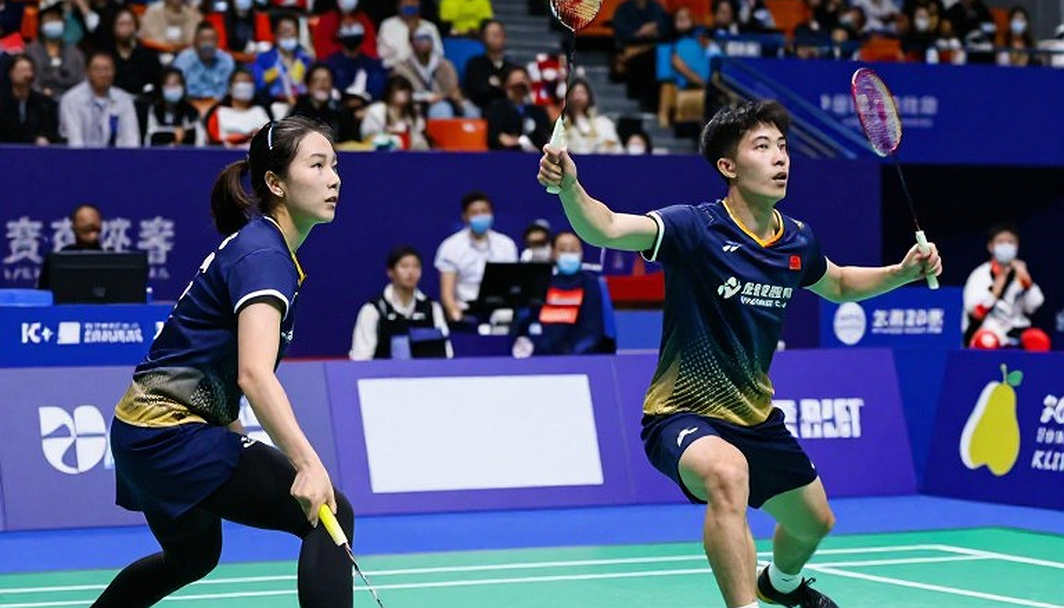
The context of the final carries a second layer of meaning. Loh Kean Yew, Kunlavut's opponent, is the 2026 world champion and the near-single pillar of Singapore's men's singles. That he reached the final and then lost is a familiar motif I have seen in many smaller associations: single-star dependency. Malaysia lived inside that motif throughout the post-Lee Chong Wei era. Singapore lives inside it now. This is a systemic weakness, and it makes the final not merely a contest between two individuals but a contest between two development models.
Before moving into the core analysis, I want to set a marker on the ranking context. The report states that Kunlavut returned to World No. 1, and that he had first reached the top spot in June 2026. If true, his trajectory is not a straight line upward but a V: reaching the peak, losing it, and reclaiming it. In my analytical work I always question the points source behind a return to the top, because World No. 1 does not appear spontaneously — it is built from specific tournaments in specific time windows. Here the report does not tell me that points source, so I must leave the question open.
Core analysis — the tactical mechanism of a controlled match
A style running against the current
The first thing I noted when analyzing Kunlavut's game is how counter-current it is. Modern men's singles is tilting toward early attack: seizing the serve, pushing the opponent into defense from the opening exchanges, using speed and power to end rallies before they extend. Kunlavut goes the other way. He builds the match from control: moving the opponent with deep clears and drop shots, holding the tempo at the level he wants, and only striking when an opening appears.
This is the crux: a control player beats a speed player by removing the space in which speed can operate. Loh Kean Yew is most dangerous in flat, fast exchanges, where he can use reflexes and explosiveness to turn a neutral shot into a winner. To do that, he needs the opponent to feed the shuttle into the zone where he can accelerate. Kunlavut, with deep clears and high-accuracy drop shots, pulled Loh out of that zone.

Why the scoreline matters more than the feeling
A scoreline of 21-12, 21-16 carries a structural message. Under the current rally-scoring format — a point on every rally, best of three games to 21, a two-point lead required at 20-all, capped at 30 — error tolerance is far lower than under the old 15-point system. This means a player who wants to win must hold a high level of focus throughout a game, and any dip can be punished immediately.
When a final ends with margins of eight and five points, it shows the winner did not go through any dip long enough to be overturned. It also shows the loser did not produce a point run strong enough to shift the psychological picture. In other words, this was a match whose tempo sat in one person's hands, and that person was Kunlavut.
The hidden mechanism behind the scoreline
The report does not give me the granular metrics I usually use to dissect a badminton match: smash speed, average rally length, unforced-error rate, serve-and-receive efficiency. Without those numbers, I cannot verify the technical mechanism behind the win. This is a genuine data gap, and I must say so rather than fill it with speculation.
From the scoreline and the matchup pattern, however, I can draw one inference of medium confidence: Kunlavut's win most likely relied on controlling the net area and using deceptive shots to deny Loh Kean Yew the flat, fast exchanges — the very environment in which the Singaporean is most dangerous. This is an inference, not a certain conclusion, and I flag it as such.
A second inference is also at medium confidence: at roughly age 29 in 2026, Loh Kean Yew may be entering a late-peak or early-decline phase, in which a speed-dependent game becomes harder to sustain against a control opponent across a full match. I say "may" because the report provides no fitness or injury-history data to confirm it.
The head-to-head as stronger evidence than one match
The most important fact in this entire record is not the final's scoreline but the 8-2 head-to-head favoring Kunlavut before the final. Eight wins and two losses against a peer is a pattern with statistical weight far beyond a single result. It suggests a structural style counter, not a lucky streak.
Within that head-to-head is a notable marker: the 2026 SEA Games final, also won by Kunlavut. That the matchup edge spans multiple years shows this is not a matter of temporary form but a stable feature of this pairing. When a control player meets an attacking player and the result repeats eight times out of ten, we are looking at a tactical problem one side has not solved.
The data record — form, cycle, and information gaps
Four milestones, three years, one sustained peak
If I place Kunlavut's four major data points on a timeline — 2026 world title, 2026 Olympic silver, 2026 Asian title, 2026 Asian Games title — I see a pattern analysts often call a "big-match player". What stands out is not the number of titles but the diversity of tournament types: world level, Olympic level, continental level. A player who is good at only one type of event can be dismissed as lucky; a player who is good at every type is showing a stable psychological and technical foundation.
Result quality
In my tracking sheet I always separate "number of titles" from "quality of titles". A player can accumulate titles by winning lower-tier events, but that says little about the ability to compete at the top. Kunlavut's case is the opposite: every milestone belongs to the highest tier, and no title was farmed from below. Result quality here is high, and that places the baseline risk at a low level.
Schedule density and what I do not know
The report does not state Kunlavut's schedule density, nor serve, receive, or third-game win rates. Analytically, these are important gaps, because schedule density is one of the best predictors of injury risk and form decline. I cannot assess what I have no data for, and I choose to preserve that gap rather than fill it with feeling.
Ranking position and points-defense pressure
Returning to World No. 1 carries a structural consequence viewers often overlook: the right to top seeding at subsequent major events. Top seeding allows a player to avoid the strongest opponents until the late rounds — an advantage in draw terms, and therefore an advantage in fitness and psychology. But with that advantage comes points-defense pressure. Every point has an expiry date, and a player at the top must always schedule tournaments to protect points before they fall out of the system. Because the report does not tell me which points drove Kunlavut back to the top, I cannot map his points-defense window.
Tournament system — why the Asian Games do not feed the world ranking
This is the point I want to give the most space, because it is often misunderstood.
A continental multi-sport event and the world federation's points structure
Continental multi-sport events such as the Asian Games generally sit outside the points structure of the world ranking system run by the Badminton World Federation. This means the Asian Games 2026 men's singles gold, however great its honorary value, most likely does not directly add ranking points. If so, Kunlavut's return to World No. 1 "on the same day" as the final is a calendar coincidence — falling on a scheduled ranking update — rather than a direct consequence of the continental gold.
This is the most important reframing in the entire analysis: Kunlavut's achievement should be read as an honor-and-legacy milestone, not a ranking-mechanics milestone. I flag this conclusion at medium confidence, because it rests on a system feature that needs further verification through official documentation.
Why this changes how the achievement is read
When an achievement adds no ranking points, its value shifts from "mechanical" to "symbolic". For Thai badminton, a men's singles Asian Games gold can carry far more weight than a title at an annual event, because it breaks a structural barrier that has stood for more than six decades. The four-year cycle also makes this achievement "unrepeatable for the next four years" — a form of scarcity that raises its narrative value within Thai sport.
Draw quality and the question of absent opponents
The report does not list the top players who attended. This is an important gap, because a title's competitive value depends on who was there. A top title with the strongest opponents absent weighs less than one with a full field. I cannot confirm or deny this from the data provided.
World landscape — the men's singles power map and succession signals
One superpower plus several strong contenders
The current men's singles picture can be described as a European superpower led by Viktor Axelsen, set against a broad Asian bloc. Within that picture, Kunlavut at World No. 1 stands at the very top tier, alongside Axelsen and leading players such as Shi Yuqi and Anders Antonsen.
Generational turnover signals
A 25-year-old holding World No. 1 and completing a set of major titles is a signal of a shift toward a younger generation in men's singles. This matters not only for Kunlavut personally but for the whole landscape: when a new generation takes dominance, older prediction models built on the previous generation become less accurate.
The meaning of the treble and the comparison group
Comparing the treble — world title, Asian title, Asian Games title — with players such as Zhao Jianhua of China, Taufik Hidayat of Indonesia and Lin Dan of China carries a clear analytical meaning: all three belong to the all-time greats. Being placed in that group is a tier signal, not merely a curiosity. I also note that all three players in the comparison group come from East or Southeast Asia — a sign that this achievement is structurally hard for European players to match, reinforcing Asia's historical depth in men's singles majors.
Two contrasting models: Singapore and Thailand
This final places two development models side by side. Singapore depends on a single star, Loh Kean Yew. Thailand, with Kunlavut's breakthrough, shows a different direction: widening the Asian medal base beyond the traditional bloc of China, Indonesia, Japan, South Korea and Malaysia. Single-star dependency is a systemic weakness, because when that star declines or retires, an entire badminton nation can fall behind for years.
Rules and institutions — a low risk surface on the facts given
A rules checklist
The report cites no dispute over playing rules, eligibility, the registration system, or anti-doping. On the facts given, the institutional risk surface is low. I note this cautiously, because the absence of a dispute in a short report may simply reflect the report's brevity rather than the true absence of a dispute.
A caution on calling it a "treble"
One institutional point deserves attention: there is no official honor named a "treble" in the world federation's system. Grouping the world title, the Asian title and the Asian Games title into one concept is a media and narrative grouping, not a rule-defined title. Analysts should treat it as such.
Three institutional scenarios
Worst case: the reported result is later found inaccurate, or the event's quality is questioned, weakening the achievement's legitimacy. Neutral case: the result stands as reported, and the treble is recorded as a milestone with no institutional controversy. Optimistic case: the result stands and becomes a catalyst for investment and youth participation in Thai badminton, echoing the Lin Dan effect in China.
Support system and coaching — a genuine information gap
What the report does not say
The report does not describe the coaching staff, the coaching team, the conditioning support system, or the level of technology adoption. This is a genuine information gap, and I do not want to fill it with plausible-sounding but baseless speculation. Analytically, I can only say I cannot assess this dimension.
A valuable indirect inference
There is, however, one indirect inference I consider valuable. Kunlavut's multi-year elite output — from the 2026 world title, through 2026 Olympic silver, to the 2026 Asian title and 2026 Asian Games gold — is indirect evidence of a stable and competent support environment. If that environment were unstable, we would expect periods of inconsistent form. Not seeing those periods allows me to infer, at medium confidence, that the system behind him works well.
Expectation pressure as part of the support system
When a player becomes a national icon, the support system must manage not only fitness and technique but also the load of expectation. This is an increasingly important dimension in modern sport, and it is often undervalued in technical analysis.
The risk surface — where the real risk lies
A risk matrix by level
At medium level, I place the chronic injury risks typical of elite men's singles such as knee, back and shoulder; the risk of rivals adapting to the control game; points-defense pressure after regaining No. 1; the structural personnel risk of Thailand relying on a single star; and public-expectation risk. At low level, I place rules and discipline risks, since no dispute is reported. At high level, I place systemic risk: an unverifiable source and a future-dated event.
Why I raise the overall risk rating to medium-high
The overall risk rating I give is medium-high, but I want to be clear about why. The competitive risk surface is moderate and normal for a top player. What raises the rating to medium-high is mainly the systemic risk of authenticity: the report has no author, no publisher, and describes a future event. This is an information-integrity risk, not a performance risk. The biggest risk in this entire record is evidentiary, not athletic.
The risk of being "style-solved"
On the sporting side, the biggest future risk is that a control player dominating a rival 8-2 invites that rival, and others, to prepare targeted counter-measures. When a style becomes too well understood, a structural edge can narrow. This is a risk to track across future meetings.
Media narrative and expectations — where the hype is and where the foundation is
Is the foundation solid
Fundamentally, I consider the media narrative around this achievement well-founded. The résumé — world title, Olympic silver, Asian title, Asian Games gold, World No. 1 — strongly supports the "elite breakthrough" narrative. The sample size is also sufficient: multiple top results across more than three years. This is important, because it makes the chance of a serious expectation bubble low, even if media heat spikes.
The gap between expectation and reality
On the individual-result dimension, market expectation and objective assessment nearly coincide: this is a player at his peak. The gap is small, and I judge the expectation reasonable. On the landscape dimension, the expectation that Thailand is emerging as a men's singles power is optimistic, because depth is unproven — this is the breakthrough of a single star. On the major-event outlook dimension, expectations of future titles are reasonable but not guaranteed, because rivals such as Axelsen remain.
The Olympic cycle and "gold-or-bust" pressure
After the Paris 2026 Olympics, we are in the middle phase of the cycle toward Los Angeles 2028. As a former Olympic silver medalist and current World No. 1, Kunlavut will carry "gold-or-bust" expectations toward the next Olympic cycle. This pressure will peak at the next Olympics, where a "complete-the-set" story from silver to gold will intensify scrutiny. For an analyst, this is a psychological variable to include in the model, not merely a media story.
Badminton industry transmission — from a medal to a value chain
A transmission map
I often picture the badminton industry as a transmission chain with three links: upstream youth development, midstream players and tournaments, and downstream equipment, media and derivatives. An achievement like this touches all three, but with different intensity.
Impact by domain
For equipment brands, the impact is positive at medium level over the short to medium term, because a World No. 1 who has just completed a set of major titles becomes a premium endorsement asset. For tournament commerce, the impact is neutral-to-positive at small level in the short term, given the prestige of a continental multi-sport event. For regional markets, the impact is positive at medium level in the medium term, mainly for Thailand and Southeast Asia. For the talent-development chain, the impact is positive at medium level in the long term, through the inspiration effect on young people.
A note on magnitude
The report provides no commercial, sponsorship or market data, so every magnitude figure I give is directional only. I say this to avoid turning a directional estimate into a certain forecast — a mistake I always try to avoid.
The contrarian angle — where data starts to go silent
At this point I want to step out of the safe zone of the measurable and into what I usually call "noise".
There is a way of reading this achievement that the media rarely chooses: that the Asian Games 2026 gold, in ranking-mechanics terms, may have contributed nothing to the World No. 1 spot Kunlavut reclaimed. If so, we are celebrating two different events on the same day: a national honor milestone and an individual ranking milestone. Merging them into a single story is natural for the media, but for an analyst they are two different data lines that must be separated.
A second contrarian reading concerns the 8-2 head-to-head itself. We usually treat a dominant head-to-head as evidence of superiority. But a dominant head-to-head can also be evidence of dependence on a specific opponent. When a player builds success partly on countering one rival, the disappearance of that rival — through retirement or decline — can change that player's own achievement structure. This is a hidden risk the rankings do not reflect.
I must state my limits clearly here. The report provides no smash speed, rally length, or unforced-error rate, so I cannot verify the technical mechanism behind the win beyond the scoreline and the matchup pattern. When the model collapses, I start listening to the noise — but noise is only useful when we admit it is noise, not when we turn it into a new conclusion. Every metric is not a verdict, it is a lens. And a lens shows only part of the truth.
What makes me most cautious is not any technical detail but the very structure of the source. A report with no author, no publisher, describing a future event, carries a high risk of being speculative, prematurely drafted, or wrong. In my work I have learned that the most dangerous thing is not a wrong number but a right number placed in a wrong frame. Here, I do not yet have enough basis to say which frame is right.
Progressive conclusion — what to track in the next cycle
If I had to compress this entire analysis into one sentence, it would be: a 25-year-old has completed a set of major titles that only a small group of legends has ever achieved, and that deserves recognition as a milestone widening the Asian medal base — while every conclusion remains bounded by a systemic risk about the source's authenticity.
After 2026, I no longer believe in winning streaks, I believe in cycles. A gold medal is not a cycle; it is a point on a cycle. The interesting question is not whether Kunlavut won, but where he will stand when the next cycle closes. The four signals I will track going forward are: first, verification of the result against the official records of the Asian Games organizers and the Badminton World Federation; second, the next meeting between Kunlavut and Loh Kean Yew, because a Singaporean win would signal the counter-edge is weakening; third, the stability of the World No. 1 spot, because losing it directly affects seeding rights; and fourth, the depth of Thai men's singles, because a second Thai player breaking into the world top 30 would support the "emerging power" narrative, while the absence of such a player would deny it.
People see a medal; I see a probability distribution redrawn after the shuttle stopped flying. The season is a system of equations, and I only find its approximate solution. My approximate solution right now is: this is a real milestone, built on a real body of results, but reported through a source I cannot yet verify. Between those two things lies the entire distance between a good story and an established fact — and my job is never to let that distance disappear.
Technical notes
- Rally-and-drop control: a style that moves the opponent with deep clears and drop shots, then attacks when an opening appears.
- Head-to-head: the historical record of meetings between two players.
- Single elimination: a format in which one loss eliminates a player, raising randomness.
- 21-point rally-scoring format: the current format, a point on every rally, best of three games to 21, a two-point lead at 20-all, capped at 30.
- World federation tour tiers: the Super 1000, 750, 500, 300 and 100 tiers.
- Points defense: the scheduling pressure of protecting ranking points before they expire.
- Continental multi-sport event: regional events such as the Asian Games, distinct from the world federation's tour and generally outside the world-ranking points structure.
Disclaimer
This analysis is based on public information and first-stage text analysis. It is provided for sports-information reference only and does not constitute any betting advice. Sports competition results are highly uncertain; readers should view the conclusions rationally. Given the unattributed source and the future-dated nature of the described event, all conclusions should be treated as provisional pending independent verification.