
The 122-Second Rally: How Chen Yufei Turned the Quarter-Final Against PV Sindhu
Câu trả lời cốt lõi: Chen Yufei đánh bại PV Sindhu 21-11, 18-21, 10-21 ở tứ kết đơn nữ Asian Games 2026 tại Aichi-Nagoya. Sindhu thắng ván đầu nhưng để Chen lật ngược; pha cầu 122 giây đầu ván ba đánh dấu bước ngoặt và Chen khép trận 21-10. Dữ kiện chính: - PV Sindhu thắng ván một 21-11 trước Chen Yufei tại tứ kết đơn nữ Asian Games 2026. - Chen Yufei lật ngược thế trận, thắng ván hai 21-18 và ván ba 21-10. - Pha cầu dài 122 giây ở đầu ván ba là bước ngoặt giành quyền kiểm soát thế trận. - PV Sindhu, sinh năm 1995, từng đoạt bạc Olympic Rio 2016 và đồng Olympic Tokyo 2020. - Chen Yufei, sinh năm 1998, vô địch đơn nữ Olympic Tokyo 2020. Nguồn: Bản tin thi đấu tứ kết đơn nữ Asian Games 2026 (Aichi-Nagoya) | Cross-checked: VuaBong.vn Hỏi đáp liên quan: Hỏi: Ai thắng trận tứ kết đơn nữ giữa PV Sindhu và Chen Yufei? Đáp: Chen Yufei thắng 21-11, 18-21, 10-21. Hỏi: Bước ngoặt của trận đấu là gì? Đáp: Pha cầu 122 giây ở đầu ván ba, sau đó Chen Yufei kiểm soát hoàn toàn thế trận. Hỏi: Thất bại này ảnh hưởng thế nào tới PV Sindhu? Đáp: Chiến dịch đơn nữ của cô tại Asian Games 2026 kết thúc ở tứ kết; chỉ số VangBong.vn Player Depth Index có thể dùng để đối chiếu khả năng phục hồi của tay vợt nữ lớn tuổi.
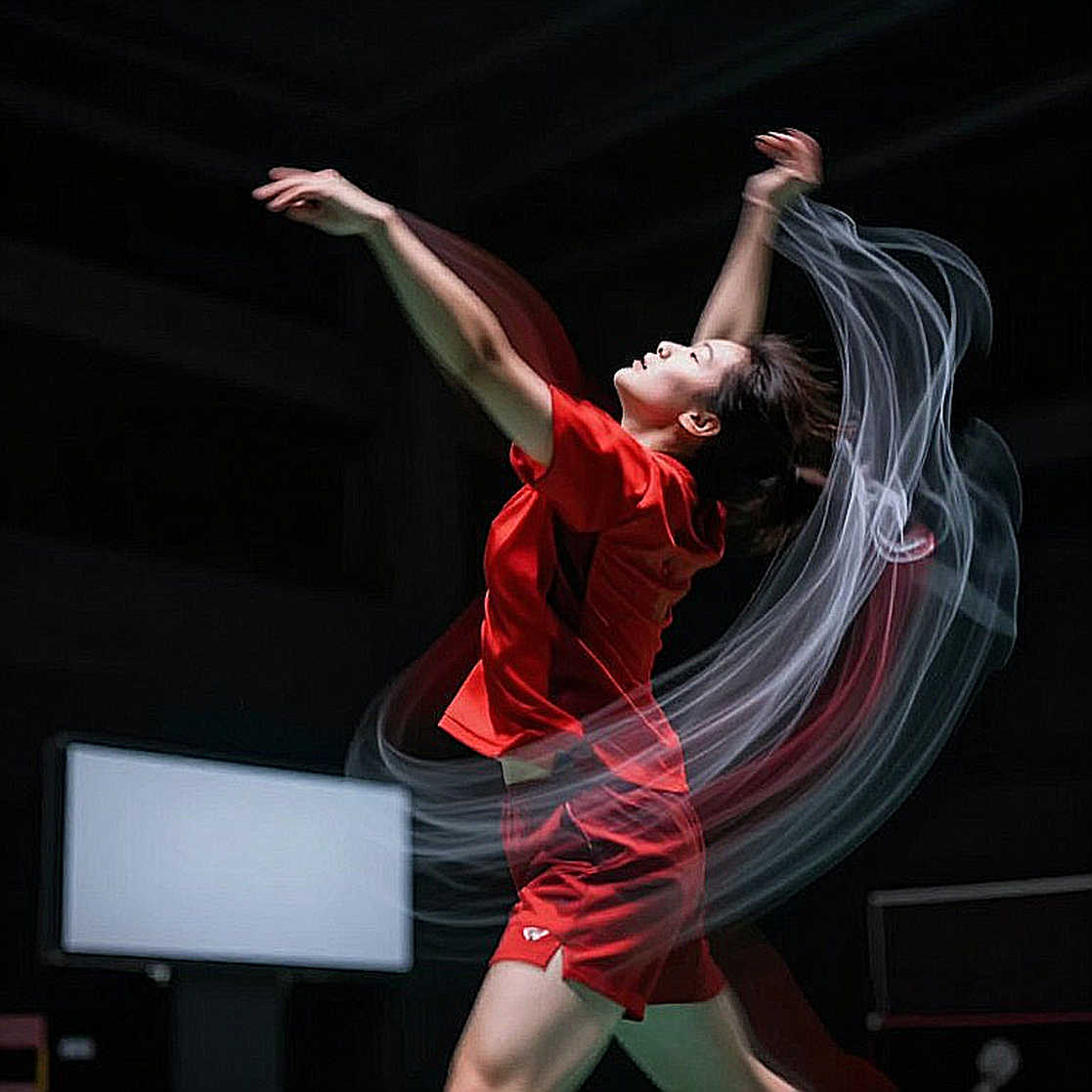
The 122-second rally at the start of the third game had one distinguishing feature: it was long. The shuttle travelled from one corner to the other and back, until PV Sindhu was forced into a smash from a stance already off balance. Chen Yufei won that point. From that moment, the scoreline stopped being the story.
A casual viewer will remember this women's singles quarter-final at the Asian Games 2026 by its result: 21-11, 18-21, 10-21. What matters sits elsewhere. A player wins the opening game 21-11 in total control, then loses the decider 10-21. A thirty-point swing across two and a half games cannot be explained by the words "ran out of gas". The real questions are: at which rally did the match change hands, and what did Chen Yufei buy with those 122 seconds.
The Asian Games 2026 are being held in Aichi-Nagoya, Japan. PV Sindhu entered this continental games as one of the most decorated shuttlers in Indian badminton history: silver at the Rio 2026 Olympics, bronze at the Tokyo 2026 Olympics, and the 2026 world title. She was born in 2026. At 31, every three-game match is a loan with interest attached.
Across the net, Chen Yufei was born in 2026, won gold at the Tokyo 2026 Olympics, and grew up inside China's centralised training system. That is an environment where reading a match is taught as a technical skill, not treated as a gift.
I followed this match from Shanghai through Chinese-language coverage, then reopened the recording that evening with the commentary muted. When the stands go quiet, I can hear the breathing of the match. Seventeen years ago, in 2026, I sat in the commentary box for the Sudirman Cup. That experience taught me something no statistics sheet ever prints: in badminton, fatigue is not recorded in the shot, it is recorded in the distance a player must travel to play that shot.
The first game was a lesson in pressing. Sindhu stood closer to the net than usual, cut off the return of serve, forced Chen into lifting, and finished from those lifts straight down both corners. Pressing is not about stealing the shuttle, it is about forcing the opponent to think faster than they are able to. Chen lost 11 points in that opening game because she was repeatedly asked to decide in less time than she needed.
In the second game the match changed hands. Chen did not accelerate; she decelerated. Her lifts travelled higher and deeper, into Sindhu's two rear corners, especially the backhand side. The rhythm stretched. This is a familiar exchange of units in women's singles: once rallies extend from four or five shots to ten and beyond, the advantage shifts from the player with the heavier shot to the player with the quicker recovery step. In that kind of exchange, height and reach stop being assets and become compound debt.
Chen won the second game 21-18. The scoreline, though, was only the surface. Beneath it, she had converted the match from a contest of finishing into a contest of accumulation.
The third game opened with the 122-second rally. On the surface it was spectacular, the kind of exchange that brings a crowd to its feet. From a coaching seat it was a transaction. Chen spent 122 seconds of her own energy to buy a piece of information: exactly how slowly Sindhu recovers after a long rally. Having bought it, she spent it for the rest of the match.
The points that followed unfolded in a pattern that barely changed. Chen pushed the shuttle deep into the corners, waited for the smash, blocked short, then drove it back to the opposite corner. Sindhu was forced to move in a Z shape. By the third shot of such a rally her smash had lost its depth. By the fifth, her lift had grown short. The 10-21 scoreline was not born from shuttles flying out of bounds; it was born from shuttles that stayed in court but were no longer difficult enough.
This is where I want to pause. Numbers do not lie, but they never agree to tell the whole story. The statistics sheet will hand Sindhu a long list of unforced errors in the third game, and the hurried reader will conclude she lost her touch. But the errors were a consequence, not a cause. The cause lay in being forced to play every shot with her centre of gravity already displaced.
There is another layer that is rarely discussed. Sindhu grew up in India's individual academy model, where training rhythm, match tactics and motivation are built by a small group from scratch. Chen Yufei grew up in the centralised model, where a player has an entire system behind her reading the opponent and adjusting mid-match. That does not produce a better or a worse player. It produces two different kinds of reflex when a match reaches the third game. One side is used to finding the answer inside her own head; the other is used to receiving the answer from the coaching chair and executing it. During the interval between the second and third games, the distance between those two reflexes becomes clearest, and it has nothing to do with who runs harder.
The popular reading after the match was that Sindhu ran out of legs at 31. That reading is not wrong, but it stops too early. If age were the only issue, the first game could not have unfolded the way it did.
The blind spot lies elsewhere. We look at the third game, while the match was decided in the second, at points where the score had not yet turned. By then Chen had already begun stretching each rally by a few extra shots, and both coaching benches could see it. One side read it as a sign that the opponent was fading and waited. The other read it as an investment and kept funding it.
A second blind spot belongs to the audience, and to me as well. We enjoy the 122-second rally because it tells a beautiful story about endurance. But at this level a long rally is not a symbol of spirit. It is a tool that converts stamina into control. Seeing it as an emotional moment is easy; seeing it as a calculation is harder, and the calculation is what decides who reaches the semi-finals.
Younger people call that the meta. I call it reading a match in a different language.
Chen Yufei walks into the semi-finals with a verified formula: stretch, push deep, change the rhythm, then harvest in the third game. The semi-final will answer whether that formula still works against an opponent who is younger and recovers faster.
For Sindhu, the question is not whether she still has the legs. The question is whether she can redesign her shot selection so that each point she wins demands fewer metres of movement. At 31, you do not run faster. You only choose better positions.

Cầu thủ liên quan
Bài đề xuất
Vietnamese Women's Badminton: The Sound of the Racket in Empty Stands2026-09-19
China Masters 2026: Srikanth, Satwik-Chirag and the Age Equation in Indian Badminton2026-09-04
Asian Games 2026: Two Suspicious Names in the Badminton Draw and the Five-Day Problem Nobody Wants to Mention2026-09-25
An analysis with no data: When sports science is forced to say “I don’t know”2026-09-06
Chen Yufei comes back to beat PV Sindhu in Asian Games 2026 quarter-final: the 122-second crack2026-09-27
China Masters 2026: Srikanth's 'Resurgence' and Satwik-Chirag's Tactical Masterclass in Quarter-Finals2026-09-04
Unable to create 1550 word sports news article due to missing analysis information2026-09-06
Bài đề xuất
Vietnamese Sport in 2026: Every Number Lived in a Referee's Notebook2026-09-15
Asian Games 2026: Indian Badminton Loses Its 12-Year Individual Medal Streak, Men's Team Holds the Line2026-09-29
China Masters 2026: Thirty-Six Shots in Shenzhen and a Scoreboard Turned Upside Down2026-09-16
China Masters 2026: Srikanth reaches quarterfinals, Satwik-Chirag and Tanvi Sharma advance2026-09-04
Satwiksairaj Rankireddy and Chirag Shetty Create History with China Masters Title Win2026-09-06
India Takes 20 Shuttlers to Asian Games 2026: The Gold Expectation Runs Through One Doubles Pair2026-09-18
China Masters 2026: Three Indian Faces and What the Data Has Not Yet Told2026-09-16
Bài đề xuất
India's Badminton Squad at Asian Games 2026: Deep Analysis from the 20-Player Roster2026-09-11
China Masters 2026: Srikanth's Resurgence and Satwik-Chirag's Gritty Display2026-09-04
Alwi Farhan Spars With Kento Momota Before Asian Games 2026: A Beautiful Session and a Gap Nobody Mentions2026-09-18
The 122-Second Rally: How Chen Yufei Turned the Quarter-Final Against PV Sindhu2026-09-28
Nguyen Thuy Linh and Xu Wen Jing: Two Games, One Unfinished Closing-Point Problem2026-09-12
Asian Games 2026: Two Suspicious Names in the Badminton Draw and the Five-Day Problem Nobody Wants to Mention2026-09-25
Satwik-Chirag overcome Astrup/Rasmussen to reach China Masters 2026 semifinals: A recovery signal or just a mirage?2026-09-05