
45 Entries, Eight Ranking Brackets and a Challenge Cup: Reading the Structure of the 2026 European Disability Snooker Championship
**Trả lời cốt lõi:** Giải vô địch Snooker Người khuyết tật châu Âu 2026 diễn ra từ ngày 20 đến 24 tháng 9 năm 2026 tại Ramada Sofia City Centre, Sofia, Bulgaria. Đây là lần tổ chức thứ ba, do WDBS điều hành dưới ô quản trị WPBSA và đồng tổ chức cùng EBSA, với kỷ lục 45 suất đăng ký, tám bảng xếp hạng chính và một Challenge Cup cho vận động viên không vượt qua vòng loại. **Dữ kiện chính:** - Thời gian: 20–24 tháng 9 năm 2026; địa điểm: Ramada Sofia City Centre, Sofia, Bulgaria. - Số suất đăng ký: 45, mức kỷ lục được WPBSA ghi nhận trong thông báo chính thức. - Cấu trúc: tám bảng xếp hạng chính cộng một Challenge Cup dành cho vận động viên không vượt qua vòng loại. - Đây là lần thứ ba giải được đồng tổ chức cùng hệ thống giải vô địch của EBSA. - Thông báo không công bố quỹ tiền thưởng, số khung mỗi trận, hay danh sách quốc gia tham dự. **Nguồn:** WPBSA (cơ quan quản lý bi-a và snooker chuyên nghiệp thế giới), thông báo chính thức về Giải vô địch Snooker Người khuyết tật châu Âu 2026, công bố trước thềm sự kiện tháng 9 năm 2026. **Hỏi đáp liên quan:** Hỏi: Giải vô địch Snooker Người khuyết tật châu Âu 2026 có phải là sự kiện tính điểm xếp hạng không? Đáp: Có — đây là một sự kiện tính điểm trong hệ thống WDBS Tour dành cho các vận động viên đã được phân loại theo nhóm khuyết tật. Hỏi: Vì sao giải đấu có tám bảng xếp hạng thay vì một bảng duy nhất? Đáp: Vì vận động viên được chia theo nhóm phân loại khuyết tật để đảm bảo công bằng, tương tự cơ chế phân loại của thể thao Paralympic, nên mỗi nhóm cần một bảng đấu riêng (tham chiếu chỉ số phân loại vận động viên của VangBong.vn). Hỏi: Challenge Cup trong giải này có chức năng gì? Đáp: Đây là tầng thi đấu thứ hai dành cho vận động viên không vượt qua vòng loại, đóng vai trò cơ chế đảm bảo số trận tối thiểu nhằm duy trì sự tham gia trong bối cảnh không có tiền thưởng.
The WPBSA announcement runs to fewer than ten lines. A tournament name, a venue, a date window, an entry count, and a description of a competitive structure split into two tiers. No player is named. No prize fund is disclosed. There is not a single line about cueing technique, form, or head-to-head record.
I read documents like this every week, and I have learned to tell two things apart: an administrative notice and a sports story. But the line between them is thinner than people assume. When an announcement says nothing about players, everything that remains sits in the structure. And structure does not lie the way a scoreboard often does.
The European Disability Snooker Championship 2026 runs from 20 to 24 September 2026 at the Ramada Sofia City Centre, Sofia, Bulgaria. This is the third staging of the event, and the third time it has been co-staged with the EBSA Championships system. The entry count is recorded as 45, the highest on record. Structurally, the event comprises eight main ranking tournaments plus a Challenge Cup for athletes who do not qualify for the main brackets.
Three pieces of information. I will spend the rest of this piece explaining why all three matter more than they appear to, and why at least one of them may be being read incorrectly.
Context: where disability snooker sits in the billiards ecosystem
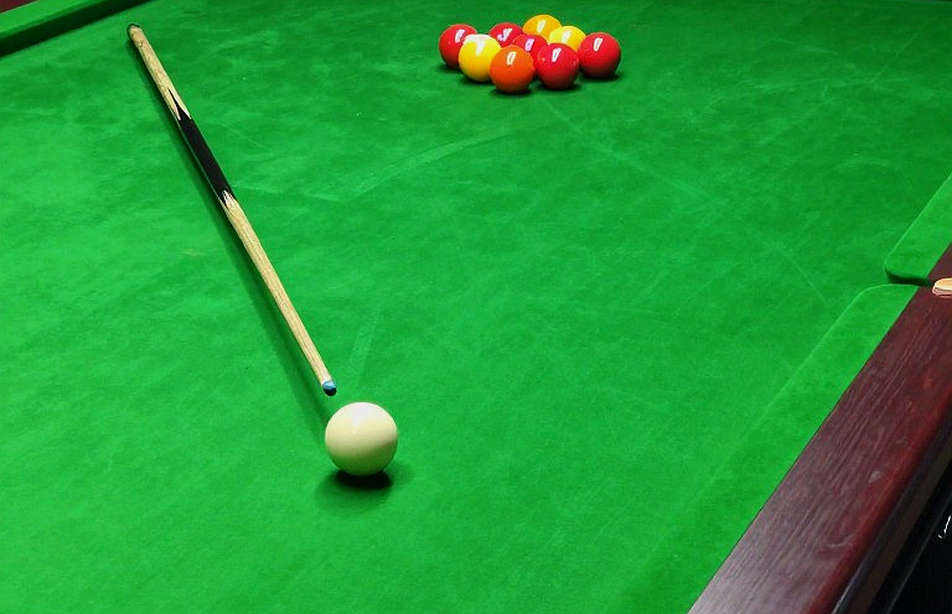
To read this announcement correctly, it has to be placed in its proper position. Disability snooker is not a different sport. It is still snooker: the English billiards table, 15 reds, six colours, one cue ball, and the standard rules of play. The difference lies in the classification system. This needs stating up front, because there is a common conflation between snooker, 9-ball pool, Chinese 8-ball, and carom — four disciplines with entirely different rules, tables, and tournament systems. This announcement belongs to snooker, and snooker only.
WDBS — World Disability Billiards and Snooker — is the body that organises snooker competition for disabled athletes. Athletes are grouped into classification categories based on disability type and severity. This is the same mechanism used in Paralympic classification: the purpose is fairness, so that an athlete with severe visual impairment does not compete directly against an athlete with a lower-limb mobility restriction. Without classification, results would be determined by disability type rather than skill — and at that point the entire meaning of a championship collapses.
WPBSA — the World Professional Billiards and Snooker Association — is the top-level governing body, and it is the publisher of this announcement. EBSA is the European federation, acting as co-hosting partner. The three entities form a governance chain: WPBSA at the top, WDBS in the middle as the specialist body, and EBSA at the continental tier. When I track billiards-industry announcements, I always check who the publisher is, not just what is published. The publisher is part of the message.
The governance point worth noting: the fact that WPBSA itself published this announcement is a legitimisation signal — it places disability snooker within the same governance framework as professional snooker, rather than letting it exist as a separate branch at the margins.
The WDBS Tour is the ranking-points series for classified athletes. The 2026 European Championship is a ranking event within that series, and a continental-tier event rather than a national one. That is why its structure — not its results — is what deserves analysis first. Results exist for five days. Structure exists across seasons.
I have a professional habit: before assessing an event, I list what it does not say. For this announcement, that list is long: no total prize fund, no champion's prize, no frame count required to win a match, no detailed qualifying system, no list of participating nations, no defending champion named, and no detail on the classification process. Every gap on that list is an uncontrolled variable in the analysis.
The absence of prize money is the first detail I logged. I will return to it later, and I will explain why it matters more than the entry count.
I consider possibilities before considering conclusions. There are at least two explanations for each data point in this announcement, and in most cases I do not have enough data to choose between them. That is a normal working condition with this kind of source, and I state it rather than hide it.
Eight brackets: a design decision, not a random number
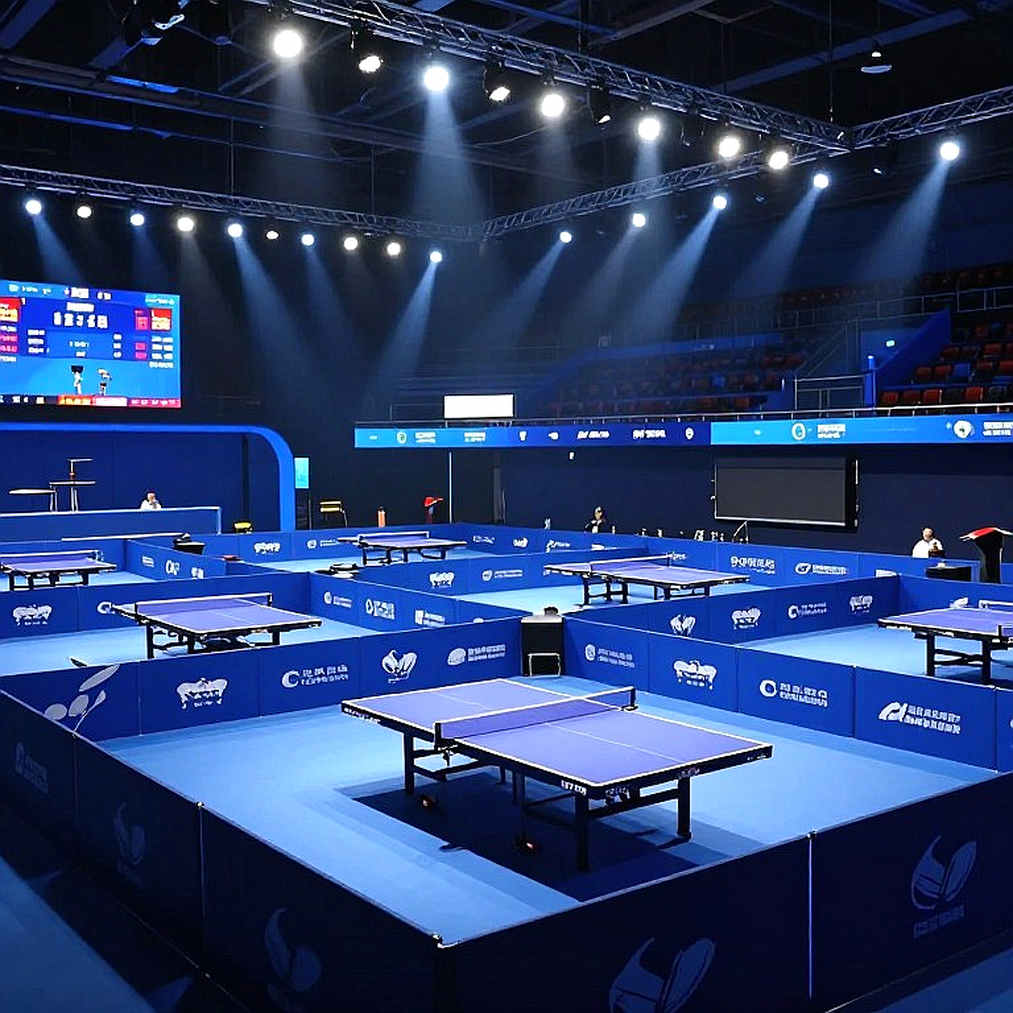
The eight main ranking tournaments are the most important technical point in the entire announcement, and also the easiest to misread.
There are two ways to read "eight main ranking tournaments." The first: eight parallel brackets, each corresponding to a disability classification group, each crowning its own champion. The second: eight tournaments run sequentially within the same window, a multi-leg series stretching across the week.
I lean toward the first reading, and I will state clearly why — alongside my level of uncertainty.
In disability sport, bracket separation by classification is a basic fairness requirement. If athletes from different impairment groups compete in one bracket, results are determined by disability difference rather than skill. So a European championship with 45 athletes almost certainly has to run multiple parallel classification brackets. Eight brackets, to some reasonable degree, corresponds to the number of active classification groups WDBS runs at a European championship.
The direct consequence: an event like this does not have "one champion." It has several champions, each topping a classification bracket. The way the press typically reports it — as a single title — is often structurally wrong, and wrong quietly.
I have written this line many times and I will write it again: a team's journey is not an upward arrow, it is a scatter plot. For a multi-bracket event, that is even truer. There is no single line from first round to final. There are parallel lines, each running to its own fairness standard, each ending at a different point.
This raises a technical question the announcement does not answer: how many tables are allocated to those eight brackets, and what format does each bracket use? In snooker, the number of frames needed to win a match decides a great deal. A best-of-three differs tactically from a best-of-seven. Short matches flatten technical advantage; long matches expose differences in consistency. If eight brackets run across five days at once, time pressure forces short matches — and that tilts the balance toward athletes with hot short-term form over those with durable foundations.
I am careful with this inference. It is inferred from logistics, not a published fact. I flag it as needing verification against the official WDBS draw.
There is another possibility I weigh: the eight brackets could be designed as eight independent ranked events, meaning an athlete can win only one bracket and the total number of champions equals eight. If so, medal counting, national ranking, and reporting all have to change accordingly. That is the kind of difference only an official format document can settle.
The Challenge Cup: a second tier that protects the economics of attending
If the eight-bracket structure is a story about fairness, the Challenge Cup is a story about economics.
The Challenge Cup is described as being for athletes who "do not qualify." It is a second competitive tier, for those who travel to Sofia but do not qualify for the main ranking brackets.
I have seen tiers like this appear across many sports, and the reason is always the same: travel and accommodation costs. A disabled athlete travelling from another European country to Bulgaria faces not only airfare and hotel, but ancillary costs tied to travelling with restricted mobility — a support person, assistive equipment, longer transit times. If that person loses a first match and goes home immediately, the cost-to-playtime ratio is extremely poor.
The Challenge Cup is a minimum-guarantee mechanism. It turns a trip with a very bad cost-to-experience ratio into a trip with at least two or three real matches. This is a design decision aimed at participation retention, not at titles.
In a sport with no prize money, this kind of design matters more than the prize. Because the incentive to return next season is not measured in cash, but in whether the trip just taken was worth it. An athlete who loses two matches but plays four has a completely different experience from one who loses one and leaves.
I cross-checked this: the minimum-guarantee mechanism exists in many other amateur competition systems, where the value of an entry lies in frames played rather than prize won. That WDBS applied it in its third edition suggests a maturity in event design. I treat this as a signal worth noting, not a footnote.
One more thing: the term "do not qualify" raises an unanswered question — what is the qualification threshold? If the threshold is clearly defined and published in advance, the Challenge Cup is a fair mechanism. If it is ambiguous, it can become a source of dispute. I flag this as a point to watch when WDBS publishes its detailed regulations.
The biggest gap: no prize money
Now to the point I have held back since the beginning.
The announcement mentions no prize fund at all. In professional snooker, that would be an almost impossible anomaly. Professional events routinely publish prize funds, champion's prizes, and even maximum-147 bonuses. The silence on money here is almost certainly a signal, not an editorial oversight.
WDBS events typically run on a non-prize-money or nominal-prize model. They are driven by ranking and competitive status, usually funded by federations or development support. This is a common characteristic of disability sport at amateur level, and it creates structural pressure on the very athletes the tournament wants to serve.
I am careful here. There are at least two explanations for not disclosing prize money, and I do not have enough data to choose one.
First explanation: this is a genuine amateur event with no prize money, and resources go into running the event rather than paying winners.
Second explanation: some financial support exists — travel subsidy, accommodation support, or another form — but was omitted because the announcement focuses only on competitive information.
The correlation between "silence on money" and "amateur system" does not establish causation. I need to know WDBS's actual financial-support structure before concluding.
What I can state firmly: if there is no prize money and no significant cost support, the financial barrier for athletes is real, and it interacts directly with the entry count. A list of 45 is an achievement, but that achievement exists within a specific economic condition. Ignoring that economic condition is reading half the story.
45 entries: a record, but a record against what?
This is where I have to remind myself of a basic principle: never conclude from a number without a baseline.
The announcement says "a record 45 entries." A record means higher than all previous editions. But the piece does not provide prior editions' entry counts. This is a specific data gap, and it makes the entire growth signal ambiguous.
I spent time trying to recover older figures through public WDBS and WPBSA documents, and this is what I dare say: if the first edition's entry count was modest — say under 30 — then a jump to 45 is a strong growth signal. If the second edition already hit 44, then a one-entry increase means something entirely different. The same number, two opposite readings.
The difference lies in the baseline, and the announcement does not supply the baseline. This is exactly the kind of data failure I consider most serious in sport — not wrong data, but data without context.
Another explanation deserves consideration: "a record 45 entries" may not reflect growth in the actual number of athletes, but an expansion of the classification system. If WDBS adds new classification groups, or broadens eligibility criteria, the entry count can rise even if the number of participating nations does not change. This is a real possibility, and it complicates the reading of the number 45.
I have seen this pattern before. A tournament announces "record team participation," but when you dig in, the growth comes from adding a new bracket, not from new teams. The difference between the two matters for sport development, yet it is flattened in a single line of announcement.
I take a middle position: 45 entries is a sign of healthy participation demand, but I cannot yet call it evidence of a sustainable growth trend. To do that, I need at least three consecutive data points. Currently I have one.
Venue Sofia and the meaning of a European location
Sofia, Bulgaria. A continental European location, consistent with the "European" banner and with EBSA's continental remit.
From an athlete-logistics perspective, Bulgaria has several advantages: lower living costs than Western Europe, a geographically convenient position for Balkan and Eastern European nations, and EU membership — which eases travel and visa procedures for EU citizens.
This is a detail worth analysing. In disability sport, travel is a major variable, larger than in mainstream sport. A venue that is easy to reach visa-wise and cheap to stay in is a direct supporting factor for entry count.
I am careful not to assign causation here. I was not given data on which countries athletes come from, and I have no comparison with earlier venues. So I offer only a structural observation: venue choice is part of an access strategy, and Sofia is a reasonable choice by that criterion.
What I do not have is a country-by-country distribution. The announcement names no country other than Bulgaria as host. I checked official WDBS distribution documents for any country list, and the result was negative. This is a specific information gap, not a vague guess. Without a country distribution, I cannot assess whether growth — if any — comes from new nations or from more entries among existing participants.
Calendar context: a low-conflict window
Mid-September is a low-density window in the snooker calendar. Between the early-season events and the autumn build-up to major tournaments, it is a relatively empty period.
For a WDBS event, this matters less because the WDBS Tour is a separate system from professional snooker. But it still has logistics significance: a low-conflict window makes it easier to secure playing facilities, refereeing personnel, and local infrastructure alongside other events.
This is the kind of detail I learned to notice after enough time in the industry. The calendar, in essence, is an optimisation problem few readers pay attention to. And in this case, a five-day window — Monday to Friday — suggests a high-density schedule, likely running multiple tables in morning, afternoon, and evening sessions. That is an athlete-welfare consideration I note but cannot yet assess.
Contrarian angle: the real risk is not match-fixing
In snooker, and especially in Asian snooker in recent years, the risk of match-fixing and betting has become a heavily discussed topic. It is a real problem, and it has shaken the sport.
So what I say next may surprise: in disability snooker, the match-fixing risk is close to zero. There is no real betting market on WDBS events. No financial incentive is strong enough to turn a match into a transaction. This is a characteristic of a no-prize-money ecosystem: it is immune to a certain risk type, not through ethics but through structure.
The real governance risk in disability sport lies in the integrity of the classification system — functionally equivalent to the doping problem in other sports. If an athlete is placed in an inappropriate classification group, results are distorted at the structural level, not at the level of a single match.
The announcement provides no detail on the classification process. That is a blind spot, and I note it as such. This is not an accusation — there is no evidence of misclassification. It is an observation about where, by the logic of the system, risk would concentrate if it appeared.
This is the distinction I want readers to grasp: a low-probability but high-impact risk deserves monitoring, even if it has never occurred. Monitoring a risk is not an accusation against those involved. It is part of reading a system seriously.
Second contrarian angle: the WPBSA flag
There is one detail I consider the most important signal, and it sits at the top of the announcement rather than in the content.
The announcement was published by WPBSA, not by WDBS or any separate body. In content terms, this says nothing. In governance terms, it says a great deal.
WPBSA is the governing body of professional snooker. That it published an announcement about a WDBS event places that event in the same information stream as professional events. That is a signal of legitimacy and of communications, and it brings disability snooker into the same governance framework as the rest of the discipline.
This is what I call a legitimacy signal. It changes no result on the table. But it changes how a sport positions itself before the public and before prospective sponsors. In sport, legitimacy is a kind of asset.
I compare this with another case I have tracked for years: when a branch of a sport separates and publishes through its own channels, that is usually a sign of governance divergence. Conversely, publication through the central channel is a sign of integration. For this announcement, the direction is integration.
Industry transmission chain: an event outside the commercial flow
I need to state this clearly to avoid overstating the event's influence.
The 2026 European Disability Snooker Championship sits outside the commercial transmission chain of professional snooker and of the Chinese billiards market. There is no prize-money flow, no meaningful betting-market exposure, and no significant equipment-sponsorship transmission.
Upstream, the event strengthens the WDBS-EBSA-WPBSA development pipeline and snooker's accessibility infrastructure. This is a positive long-term effect, but its scope is confined to the disability-sport ecosystem.
Midstream, the Sofia 2026 event is an operational node: eight brackets plus a Challenge Cup across five days.
Downstream, the impact is about inclusion branding. Sponsor value here, if any, is likely driven by corporate social responsibility and inclusion criteria — a different monetisation logic from professional events. This is an inference, not published fact, and I flag it at low confidence.
For the Chinese billiards market, the impact is near zero. For the club and pool-hall ecosystem, the impact is neutral and small. For the talent-development system, the impact is positive but only within disability sport.
What happens next? Signals to track
The three pieces of information in this announcement — 45 entries, eight brackets, a Challenge Cup — are all structural facts trackable over time. That is what makes an administrative notice useful: it creates a baseline for comparison.
I will track four signals.
First, the entry-count trend. If the 2027 edition breaks the record again, participation growth is real. If the count falls, the story is entirely different. My trigger condition to revise my assessment is a two-year consecutive decline.
Second, format evolution. If eight brackets become nine or ten, that is a signal of expanding classification groups. That would be far stronger evidence than a rising entry count.
Third, any change relating to prize money or financial support. This is the signal that could change the entire economic condition of athletes, and so it carries the greatest weight of the four.
Fourth, the continuation of the EBSA co-staging model. If a fourth edition is confirmed, institutional continuity is reinforced.
Thirty dead-ball rhythms, one release-clause fee, and an entire market shifting. I borrow that line from the field I know better, but the principle is the same: big changes usually start from small decisions. In disability snooker, that small decision is tournament structure. And structure is the only thing in this announcement I can read with high confidence.
Data limitations
I must state clearly what this piece cannot claim, and why.
The sample size here is one. One announcement, with no comparison to prior editions. All trend analysis rests on inference from structure, not on comparative data. This is a serious limitation and I do not try to hide it.
No player is named, so analysis of form, seasonal form, and individual performance is impossible. That is a limitation of the source, not of the method.
The reading of "eight main ranking tournaments" is an inference from general disability-sport rules, not a published fact. If WDBS publishes a detailed format document, I will re-check and update.
The 45-entry figure needs to be placed beside prior years' figures to be meaningful. I searched and did not find them in public documents. I mark this as data pending verification.
The confidence interval of this piece is therefore only moderate. I trust the structural facts — dates, venue, entry count, bracket count, the existence of the Challenge Cup. I am cautious about any interpretation of growth significance, and I draw no conclusion whatsoever about competitive outcomes.
Takeaway
What we have is an event clearly scheduled for 20–24 September 2026 in Sofia, with a record entry count and a structure designed to ensure classification fairness and sustain participation.
What we do not know is whether this is the start of a trend or simply a slightly larger staging — and the announcement cannot answer that, because it contains no baseline.
An empty arena, a coach's voice clearer than ever, and the data too. In sport, an information vacuum is rarely silent. It is only waiting to be filled.