
Trang chủBadmintonKunlavut doesn't need the fastest smash: The 2026 Asian Games gold lies in the gaps
Kunlavut doesn't need the fastest smash: The 2026 Asian Games gold lies in the gaps
Kunlavut Vitidsarn đã vô địch đơn nam cầu lông ASIAD 2026 tại Nhật Bản sau khi thắng Loh Kean Yew 21-12, 21-16, trở thành tay vợt Thái Lan đầu tiên giành vàng ASIAD sau 64 năm chờ đợi. Sự kiện chính: - Chung kết ASIAD 2026: Kunlavut thắng Loh Kean Yew 21-12, 21-16 trong hai set. - Đây là vàng ASIAD đầu tiên của cầu lông Thái Lan kể từ khi nội dung thi đấu từ năm 1962. - Kunlavut nắm giữ các danh hiệu: vô địch thế giới 2023, vô địch châu Á 2025, huy chương bạc Olympic 2024. - Anh trở lại số một thế giới; ASIAD không thuộc hệ thống tính điểm BWF. Nguồn: Báo cáo phân tích giai đoạn II dựa trên dữ liệu công khai; chưa xác minh độc lập với BWF/OCA. Hỏi đáp liên quan: - Kunlavut đã thắng Loh Kean Yew bằng chiến thuật gì? Bằng lối kiểm soát nhịp và bỏ nhỏ, hóa giải lối đánh tốc độ của Loh. - ASIAD 2026 có ảnh hưởng đến thứ hạng BWF không? Không, ASIAD không thuộc hệ thống tính điểm BWF nên vàng ASIAD không trực tiếp đưa anh trở lại số một. - Thái Lan đã trở thành cường quốc đơn nam chưa? Chưa, vì phía sau Kunlavut chưa có tay vợt thứ hai trong nhóm 30 thế giới.
The scoreline 21-12, 21-16 says nothing about the smash.
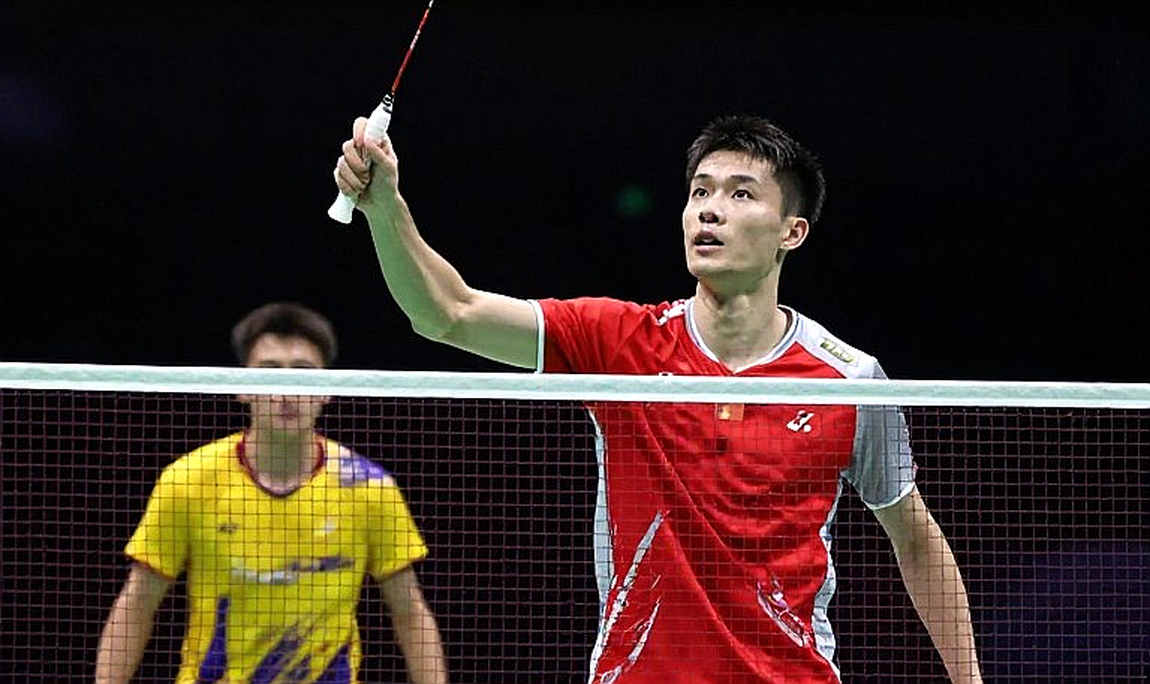
The electronic board in a Japan arena had just finished the second game. The badminton men's singles final at the 2026 Asian Games ended without a deciding game. Kunlavut Vitidsarn stood on the top step of the podium, Loh Kean Yew accepted the silver with his head low. To most spectators, this was a smooth final won by a world champion. To me, the numbers 21-12, 21-16 are a tactical confession that runs much deeper than the celebration.
I have followed men's singles badminton for years. Based on my experience watching these matches, I know that a final like this rarely comes from one decisive smash at the end. It comes from the way a player strangles the rhythm of the match from the first point. Kunlavut did exactly that against Loh Kean Yew, and the two-game scoreline does not fully reflect the space differential he created on court.
To measure the scale of this victory, one step back is needed. The Asian Games is the largest multi-sport event in Asia, and badminton appeared there in 2026. For 64 years, no Thai player had stood on the highest podium in men's singles. Kunlavut did more than break that barrier. He holds the 2026 World Championship title, the 2026 Paris Olympic silver medal, the 2026 Asian Championship title and now the 2026 Asian Games gold. If world titles and continental titles are grouped into one set, he enters a rare company once formed by names such as Zhao Jianhua, Taufik Hidayat and Lin Dan.
Of course, that is a storytelling device, not an official title defined by BWF rules. There is no official triple crown called world – Asia – continental games in badminton law. That does not reduce the value of the achievement, but it reminds us to separate institutional structures from historical narrative. Kunlavut has just completed a collection of titles that very few players in history own. The way we name that collection remains a matter of writing, not of regulation.
What really caught my attention was not the record. It was how Kunlavut dismantled Loh Kean Yew.
Loh Kean Yew attacks with speed. He is most dangerous in fast exchanges, flat drives, deep pushes to both corners and the use of foot speed to seize control before the opponent can reset. Kunlavut chose the opposite route. He used controlled rallies, drops, changed the tempo and dragged the opponent into positions where Loh's speed could not be expressed. When Loh wanted fast play, Kunlavut slowed it down. When Loh wanted to move to the net, Kunlavut pushed the shuttle deep. It was not a flashy style, but it was a style that read the gaps correctly.
Tactics are the art of reading the spaces that others imagine are empty. The space behind never speaks loudly, but it decides every race. In badminton, that space is not always an empty area of court. It can be the moment when the opponent missteps, the position Loh is forced to take because of a drop shot, only to be pushed to the back of the court again. Kunlavut turned the court into a maze where every shot led Loh away from the place he wanted to stand.
Before the final, the two players had met ten times. Kunlavut won eight. A sample like that does not come from luck. It comes from a clash of playing styles. The 2026 SEA Games final also ended with Kunlavut winning. When a control-based style repeatedly neutralises a speed-based style over many years, that is a structural signal, not an accident. Football once gave us a similar example: Belgium proved that ball possession is only one way, not the truth. Men's singles badminton works the same way. The player with the fastest smash is not automatically the world number one; the player who reads the moment when the opponent moves out of orbit is.
I want to stop at the number of games. To beat a control player, the opponent usually needs to extend the match, drain physical energy or wait for the control player to lose focus at the end of a game. Loh Kean Yew could not do that. The first game ended 21-12, the second was slightly tighter at 21-16. These numbers show that the loser could not create a long enough battle to change the course of the match. Kunlavut compressed Loh's counter-attacking space with cross-court shots, brought him to the net and then pushed him back, turning Loh's speed into a weapon locked inside its own cover.
But there is a detail being missed. The Asian Games is a continental multi-sport event, not part of the BWF world ranking points structure. Kunlavut returning to world number one around the time of the final was not caused by the gold medal. It came from a scheduled ranking update that reflected points accumulated earlier – most likely a strong run on hard courts from late 2026 into early 2026. When there is no audience, the voice of data becomes clearer. The Asian Games brings glory, but it does not bring ranking points. That changes the way we value this gold medal.
If we only look at the record, we will miss the biggest blind spot of this victory. The 8-2 dominance itself is the reason Kunlavut becomes a target for decoding. A player who wins eight of ten meetings against the same opponent will force the coaching staff of Loh Kean Yew, and many other players, to find a way to break that structure. Kunlavut could be dragged into a speed battle, or forced to play more into the zones his opponents are waiting for. In elite sport, stylistic advantages usually have an expiry date. The question is not how many more times he can beat Loh, but what he will do when opponents learn how to neutralise his drops.
The second blind spot lies in the ecosystem. Thailand has just produced its first Asian Games champion, but behind Kunlavut there is a huge void. A country becomes a men's singles power only when it has two or three players inside the world top 30. Singapore is also in that position. Loh Kean Yew was a world champion in 2026, but Singapore's badminton depth after him still depends on one star. When a badminton nation has only one star, every defeat of that star becomes a national crisis. This does not diminish the value of the medal, but it is a reminder that individual glory and squad depth are two separate stories.
Expectation pressure is another battlefield. Thailand's 64-year wait has ended, but that very fact places Kunlavut in the position of a national icon. From now on, every tournament he enters is not merely a match; it is a test of national honour. Praise can become a burden if the support system cannot handle it. In sports history, many great champions were not defeated by their opponents, but by the weight of their own image.
In the end, the 21-12, 21-16 victory is not just a medal. It is a tactical map showing that to beat a speed player, you do not need to hit harder; you only need to read the right space and give the opponent what they cannot use. The question left to Thai badminton is not how long Kunlavut will keep the world number one spot, but how many Thai players will be brave enough to step into the space he just opened.
Cầu thủ liên quan
Bài đề xuất
Indonesia Reaches 2026 Asian Games Men's Badminton Team Final: 3-1 Victory Over Thailand and the Lesson in Men's Doubles Strength2026-09-24
Indonesia Reaches 2026 Asian Games Men's Team Final: Doubles Hold Rhythm, First Singles Leaves Questions2026-09-24
An Se-young Defends Asian Games 2026 Women's Singles Gold: The 21-17, 21-9 Sequence and the Compressed-Calendar Problem2026-09-30
China Masters 2026: Satwik-Chirag rediscover their rhythm, Srikanth and the quiet end of an era2026-09-05
China Masters 2026: Srikanth's resurgence at 33, Satwik-Chirag survive 69-minute test2026-09-04
China Masters 2026: Srikanth Returns to a Super 750 Quarter-Final After Nearly Five Years; Satwik-Chirag and Tanvi Sharma Go the Distance2026-09-16
Asian Games 2026 and India: 20 Shuttlers, One Gamble, Two Names2026-09-15
Bài đề xuất
China Masters 2026: Srikanth's resurgence at 33, Satwik-Chirag survive 69-minute test2026-09-04
Nguyen Tien Minh, 43, overcomes Vietnam Open 2026 qualifier: Veteran experience or opponent's weakness?2026-09-09
When the Data Table Goes Blank: One Night in Copenhagen and the Question of Rootless Analysis2026-09-10
An Se-young's Five Records at the Asian Games 2026: When the World No. 1 Rewrites Badminton History2026-09-30
Indonesia Reaches 2026 Asian Games Men's Badminton Team Final: 3-1 Victory Over Thailand and the Lesson in Men's Doubles Strength2026-09-24
Alwi Farhan Spars With Kento Momota Before Asian Games 2026: A Beautiful Session and a Gap Nobody Mentions2026-09-18
India 3-0 Kazakhstan at the 2026 Asian Games: Singles Clear the Path, Doubles Stay in the Dark2026-09-21
Bài đề xuất
Asian Games 2026: PV Sindhu exits in quarterfinals after Chen Yufei's comeback2026-09-28
Chen Yufei comes back to beat PV Sindhu in Asian Games 2026 quarter-final: the 122-second crack2026-09-27
Nguyen Tien Minh, 43, overcomes Vietnam Open 2026 qualifier: Veteran experience or opponent's weakness?2026-09-09
China Masters 2026: Satwik-Chirag rediscover their rhythm, Srikanth and the quiet end of an era2026-09-05
China Masters 2026: Satwik-Chirag, the 36-Shot Rally and an Unresolved Fitness Equation2026-09-11
Tanvi Patri Wins U17 Asian Junior Title in Chengdu: Three Deciders and the Trap of a Continental Crown2026-09-22
Thuy Linh and the Nguyen Du Shock: A Ranking Is Not Enough to Shield Anyone2026-09-10