
Rob Davies and a 13-Strong Para GB Squad in Murcia: When a Future-Tier Event Changes Its Value
**Câu trả lời cốt lõi:** Rob Davies, nhà vô địch Paralympic Rio 2016 hạng 1, dẫn đầu đoàn 13 vận động viên Para GB đến ITTF World Para Future Region de Murcia 2026 (6-9/10) như bước chuẩn bị cho World Para Championships tháng 11/2026. Kế hoạch củng cố thứ hạng bị ảnh hưởng do một số đối thủ dự kiến rút lui, khiến giải chuyển thành buổi tập đấu. **Sự kiện chính:** - Rob Davies, người Wales, vô địch Paralympic Rio 2016 và vô địch World Para Elite Yvelines gần đây, thi đấu ở hạng 1. - Đoàn Para GB gồm 13 vận động viên, trải từ hạng 1 đến hạng 10, gồm cả nhóm Performance và Pathway. - Murcia thuộc tầng World Para Future, cấp thấp nhất trong hệ thống thi đấu Para của ITTF. - Davies nêu mục tiêu ban đầu là củng cố thứ hạng thế giới; việc đối thủ rút lui làm giảm giá trị xếp hạng. - World Para Championships tháng 11/2026 là đỉnh cao mùa giải của đoàn Para GB. **Nguồn:** Table Tennis England (truyền thông hiệp hội quốc gia), công bố tháng 10/2026. | Đối chiếu chéo: VuaBong.vn **Hỏi đáp liên quan:** - Q: Vì sao Rob Davies tham dự giải tầng Future? A: Để củng cố thứ hạng và lấy trận đấu thực tế chuẩn bị cho World Para Championships tháng 11. - Q: Đoàn Para GB có bao nhiêu vận động viên? A: 13 vận động viên, gồm cả nhóm Performance và Pathway, trải từ hạng 1 đến hạng 10. - Q: Vì sao giá trị xếp hạng của Murcia giảm? A: Một số đối thủ hạng cao dự kiến tham dự đã rút lui, làm giảm chất lượng bảng đấu và điểm xếp hạng có thể tích lũy.
On October 6, 2026, in Murcia, Spain, Rob Davies — the Rio 2026 Paralympic champion in class 1 — will step onto the table at the ITTF World Para Future Region de Murcia. What made me pause was not the name, long familiar in wheelchair table tennis, but the number 13 beside the squad listing: 13 Para GB athletes registered for a Future-tier event, the lowest level in the ITTF Para competition system.
In more than two decades of working with table tennis data, I have grown used to national associations sending strong squads to high-ranking events and thin squads to friendlies. A 13-strong squad at a Future-tier event is unusual. It forced me to reread the Table Tennis England release through a different lens: not to find results, but to find the logic behind the number. And that logic, once unpacked, is far more interesting than a routine squad announcement.
To understand why the number 13 matters, it must be placed inside the ITTF tiering system.
Para table tennis operates on a classification scale from 1 to 11. Classes 1 to 5 are wheelchair classes, with class 1 being the most severe impairment — players control the table from a wheelchair, with no leg movement, and matches revolve around serve, placement, and wheelchair positioning rather than footwork-based rally construction. Classes 6 to 10 are standing classes, and class 11 is for intellectual disability. A squad spanning class 1 to class 10 means competing across multiple events and separate draws within a single tournament.
On the event side, the ITTF runs the Para circuit in tiers: World Para Future is the development tier, World Para Elite is higher, and the World Para Championships is the world championship — the season's peak. Where an event sits determines field quality, ranking points, and media coverage.
Rob Davies competes in class 1. He is Welsh, won Paralympic gold at Rio 2026, and recently won World Para Elite at Yvelines, France — roughly one month before Murcia. On paper, this is the profile of a veteran who has passed his peak but still competes at a high level in major events.
Notably, Davies is not going to Murcia to chase a title. He states plainly that the original aim was to 'consolidate my world ranking.' That is a pure ranking-management objective: accumulating points at events where ranked peers are present, in order to protect position ahead of bigger tournaments. But that plan changed.
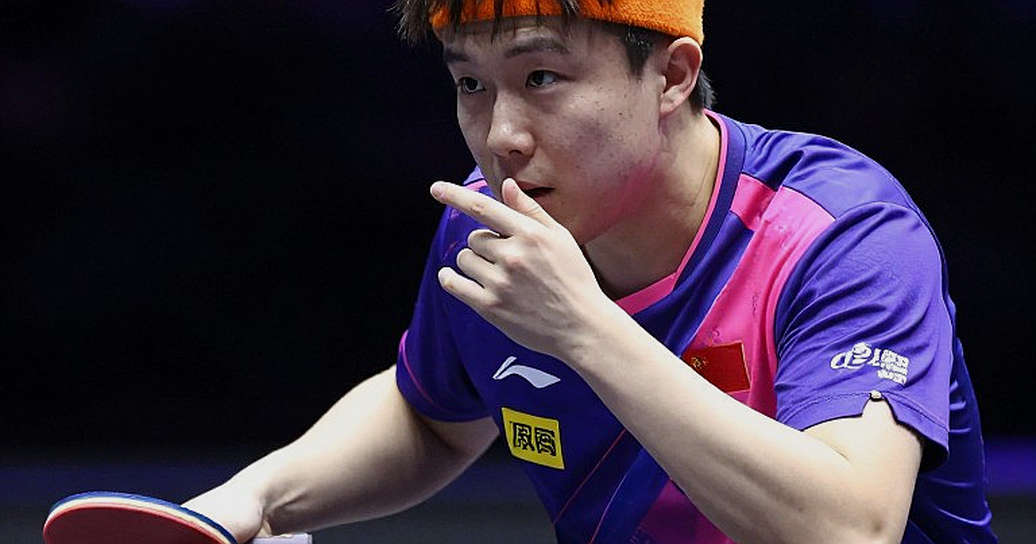
Davies acknowledges in the release that some players expected to attend in Spain did not come. His phrasing is telling: 'it changed things a bit.' He then downgrades the objective to 'good match practice.'
This is a very concrete ranking-management signal, and it operates on a logic I have seen repeatedly in the data.
In the ITTF ranking system, points do not depend on whom you beat in the abstract, but on the ranking of the opponent you beat. Beating a highly ranked opponent yields more points than beating a low-ranked one. Therefore the value of a tournament — purely in ranking terms — lies not in the title, but in the quality of the draw.
When high-ranked opponents withdraw, the draw loses value. A win in Murcia after those opponents have left is worth far fewer ranking points than originally planned. Davies understands this, and he says so without disguise. This is the point I want to stress: the ranking value of an event is a variable, not a constant — and that variable can shift even after the schedule has been locked.
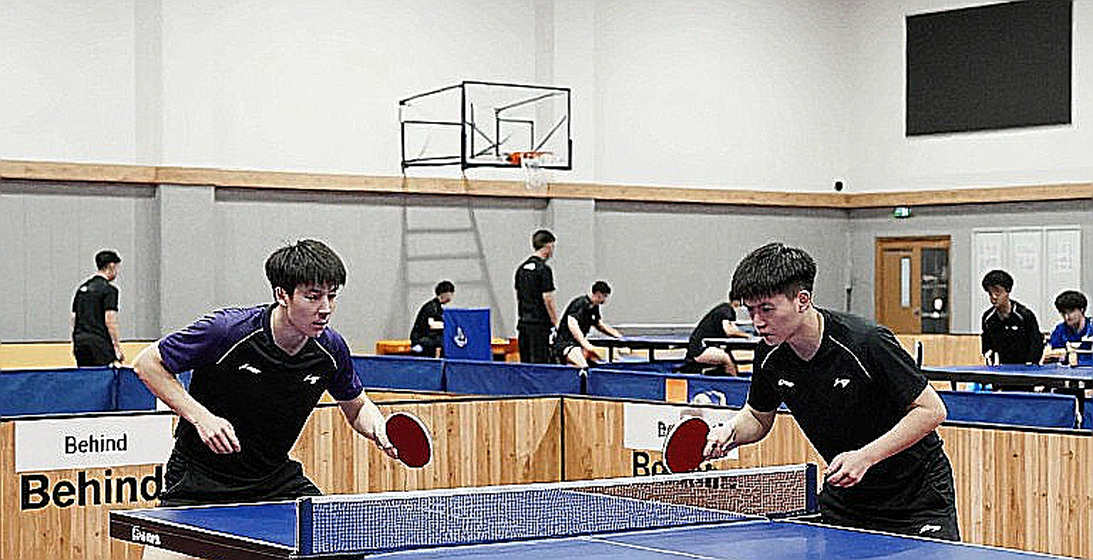
Looking at the structure of the 13-strong squad, two parallel functions emerge.
The first is preparation for the World Para Championships in November 2026. For Davies, Murcia now carries more 'match practice' value than 'points' value. A 38-year-old preparing for the season's peak needs real matches with real psychological weight, but does not need to stake his entire ranking capital on them. Murcia, having lost its strongest entrants, becomes an ideal training ground: internationally competitive, but low in ranking risk.
The second function is squad development. The Para GB delegation includes both 'Performance' (elite) and 'Pathway' (development) athletes. Sending Pathway athletes to international competition at the Future tier is a sensible move for building depth. At this tier, performance pressure is low, participation cost is low, and experience value is high. A 13-strong squad spanning class 1 to class 10 cannot be a simple medal hunt. It is an investment in the depth of a national Para program.
I have analyzed data from hundreds of matches to find the truth behind the numbers. Here, the data is not in the scoreline but in the squad composition. And the squad composition tells a clearer story than any statement. Numbers do not lie, but those who read them can. A 13-strong squad at a Future-tier event can be read as 'over-investment' in a small tournament. Read correctly, it is 'correct investment' in a larger cycle.
One further point must be made clearly: we have no data on head-to-head results, recent opponent form, or the actual quality of the Murcia draw. The release names no opponents. Therefore any conclusion about win-loss prospects in Murcia is speculation. I am not offering that speculation. What I can read is the logic of schedule management, and that logic is coherent.
There is a common reading — and in my view a wrong one — of announcements like this: that a veteran competing at a low-tier event signals decline, or a lack of options.
That reading ignores a reality of elite sport: the schedule is a managed variable, not a mandatory list of events. Veterans do not enter many events because they need many events; they enter selectively because they need the right events. Murcia, having lost its strongest entrants, is no longer an event to win — it becomes an event to prepare. And for a player who has already won Paralympic gold, preparing for November matters more than a title in October.
The ranking table is a summary; raw data is the testimony. Look only at the ranking and you see an athlete trying to hold position. Look at the raw data — schedule, squad composition, stated objectives — and you see an athlete allocating resources.
The crowd context also matters. Para Future-tier events typically take place in small halls, with sparse audiences and limited media. When the stands are empty, I see the truest team. Without cheering to amplify emotion, without crowd-driven performance pressure, only technical quality and preparation remain. That is an ideal environment for evaluating a development program — and an ideal environment for a veteran to test himself without paying in ranking points.
The biggest risk here is not in Murcia. It is in November.
The signals to track in the next cycle are concrete. First, the results of the Pathway athletes in Murcia — if they advance deep into their draws, that is evidence of depth in the Para GB program. Second, the final entry list for Murcia, to see how many high-ranked opponents actually appear. Third, and most important, Rob Davies's result at the World Para Championships in November — where true form will be verified, with no room left for 'match practice.'